
Subject Selection and Academic Guidance
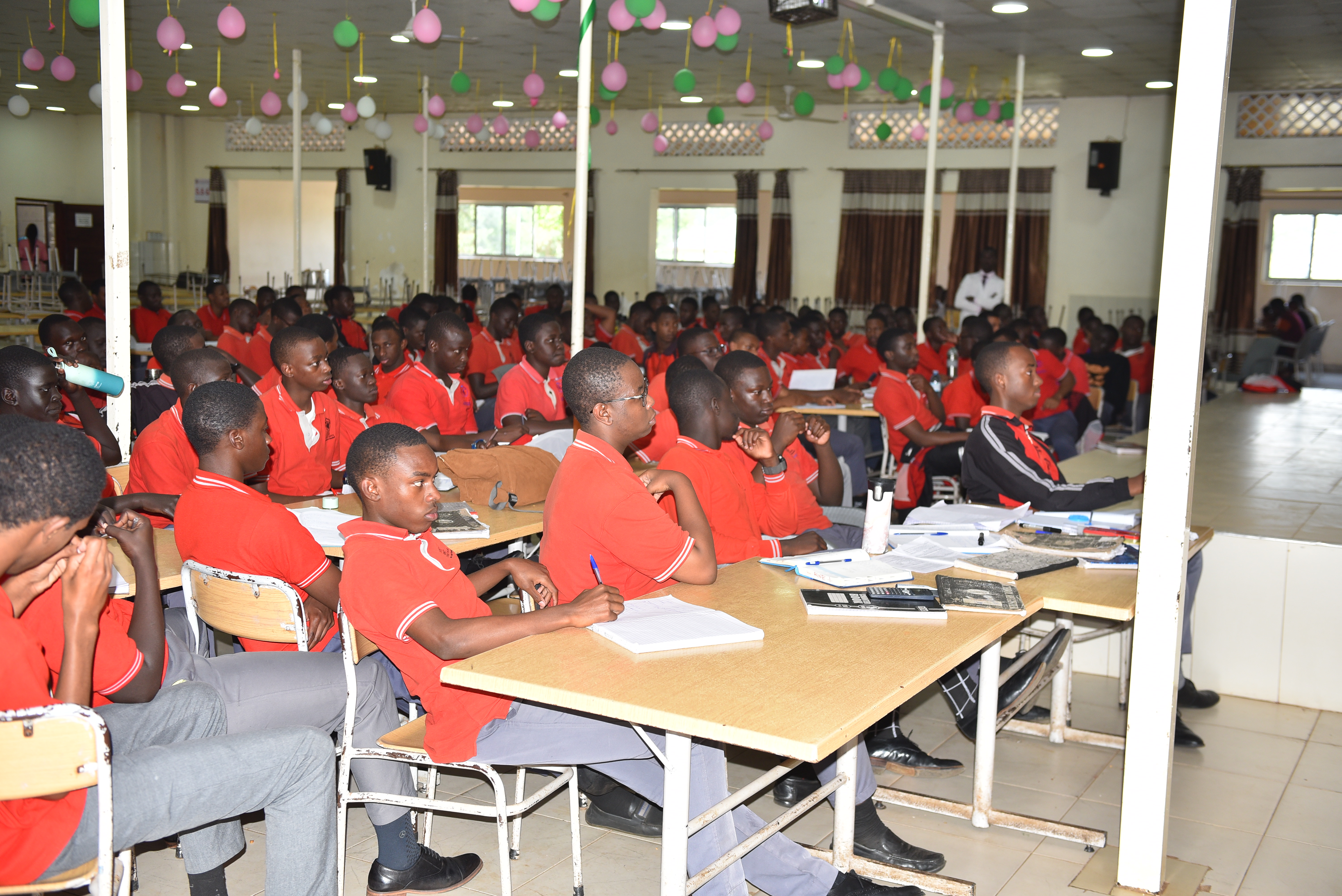
At Light Academy Secondary School, we believe that education should empower learners to think critically, act creatively, and prepare confidently for their future careers. To achieve this, we offer a broad and flexible curriculum that gives students the opportunity to choose subjects that align with their interests, abilities, and aspirations, while meeting the standards set by the National Curriculum Development Centre (NCDC) and the Ministry of Education and Sports.
Subject selection is a key part of every student’s educational journey. At Light Academy, students are guided by teachers and academic advisors to make informed choices that best suit their strengths and future ambitions.
From S.1 – S.2 levels, learners are exposed to a wide range of subjects to help them discover their interests. As they progress to Senior Four and Senior Five, they begin to specialize in subjects that prepare them for national examinations and higher education.
Our dedicated team ensures that each learner receives career guidance to understand how different subject combinations can lead to university courses and professions such as medicine, engineering, ICT, law, business, and the arts.
Integration of the New Lower Secondary Curriculum
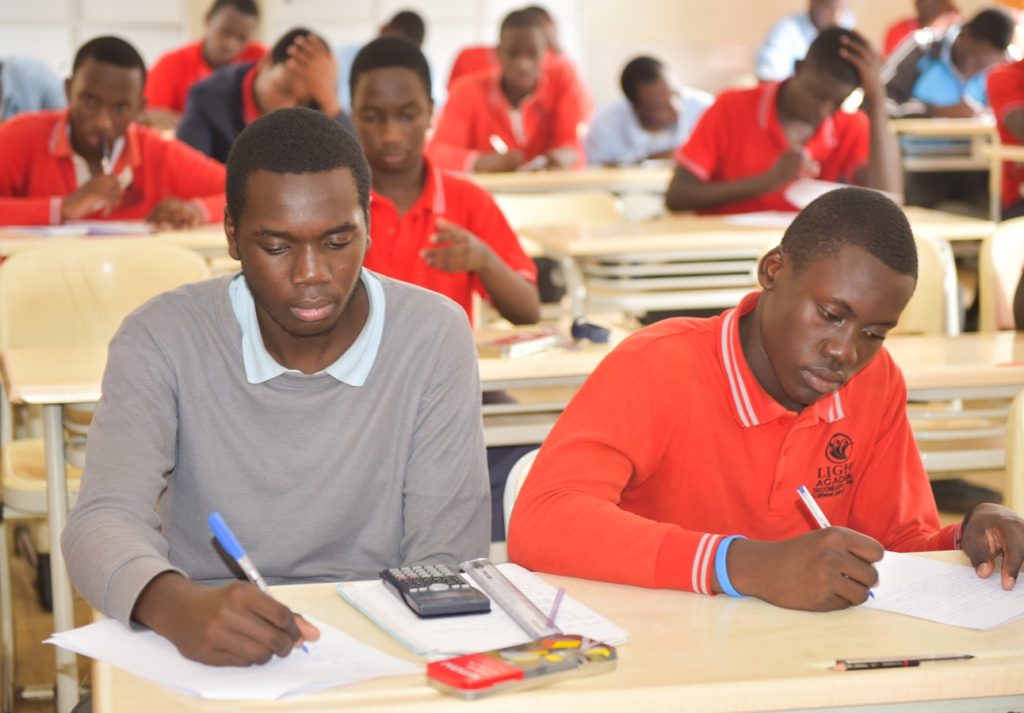
Light Academy Secondary School has fully embraced Uganda’s Competency-Based Curriculum (CBC) introduced by the Ministry of Education and Sports. This new approach shifts the focus from rote learning to skills development, creativity, innovation, and problem-solving.
Under this curriculum:
Learners are actively involved in hands-on projects, presentations, and group work.
Assessments emphasize continuous learning and application of knowledge, rather than only final exams.
Teachers act as facilitators, guiding students to explore ideas and think independently.
Learners develop 21st-century skills such as critical thinking, collaboration, communication, and digital literacy.
The school has invested in training its teachers to effectively deliver the new curriculum and has equipped classrooms and computer labs with learning resources that support interactive and technology-aided instruction.
Our O’level subjects are broadly categorized into the following groups:
1. Sciences – Physics, Chemistry, Biology, Mathematics, Computer Studies
2. Humanities – Geography, English, History & Political Education, Religious Education, Literature in English
3. Languages – English, Kiswahili, Chinese, Turkish and other electives
4. Creative Arts and Technical Studies – Fine Art, Entrepreneurship, ICT & Robotics
ORDINARY ‘O’ LEVEL | ADVANCED ‘A’ LEVEL | ||
| Subject | Papers | Subject | Papers |
| English | 112/1 | Mathematics | P425/1,P425/2 |
| Mathematics | 456/1 | Biology | P530/1, P530/2, P530/3 |
| Geography | 273/1, 273/2 | Physics | P510/1, P510/2, P510/3 |
| History & Political Education | 241/1 | Chemistry | P525/1, P525/2, P525/3 |
| Entrepreneurship | 845/1 | Economics | P220/1, P220/2 |
| Biology | 553/1, 553/2 | Entrepreneurship | P230/1, P230/2 |
| Physics | 535/1, 535/2 | Geography | P250/1, P250/2, P250/3 |
| Chemistry | 545/1, 545/2 | History | P210/3, P210/6 |
| IRE /CRE | 225/1 – 223/1 | IRE | P235/1, P235/2, P235/3 |
| Kiswahili | 336/1 | CRE | P245/1, P245/2, P245/4 |
| Computer Studies | 840/1 | Fine Art | P615/1, P615/2, P615/3 |
| Literature | 208/1, 208/2 | Sub Computer Studies | S840/1, S840/2 |
| Fine Art | 612/1, 612/2 | Sub-mathematics | S475/1 |
| PE | 555/1, 555/2 | General Paper | S101/1 |
At the Advanced Level (A’ Level), students may choose combinations from:
Science combinations (e.g. PCM, PEM, BCM)
Arts combinations (e.g., HEL, HLD, HEG, combinations)
Each student is encouraged to select subjects that match their career goals and academic strengths.
No. | SCIENCES | No. | ARTS | No. | ARTS | SC/SM | SUB COMP SUBMATHS | |||
| 1 | BCM/SC | 1 | HEI/SM | 1 | GEntD/SC | B | BIOLOGY | |||
| 2 | PEntM/SC | 2 | GEA/SM | 2 | GEntA/SC | C | CHEMISTRY | |||
| 3 | PCM/SC | 3 | GEEnt/SM | 3 | DEntA/SC | M | MATHEMATICS | |||
| 4 | MEA/SC | 4 | GEI/SM | 4 | HEntI/SC | P | PHYSICS | |||
| 5 | MEG/SC | 5 | HEA/SM | 5 | HEntG/SC | E | ECONOMICS | |||
| 6 | MEntA/SC | 6 | HED/SM | 6 | HEntD/SC | Ent | ENTREPRENUERSHIP | |||
| 7 | MEntG/SC | 7 | HEntA/SM | 7 | GEntI/SC | G | GEOGRAPHY | |||
| 8 | PAM/SC | 8 | HEG/SM | 8 | HAG/SC | H | HISTORY | |||
| 9 | PEM/SC | A | ART | |||||||
| I/D | IRE/DIVINITY |
Textbooks
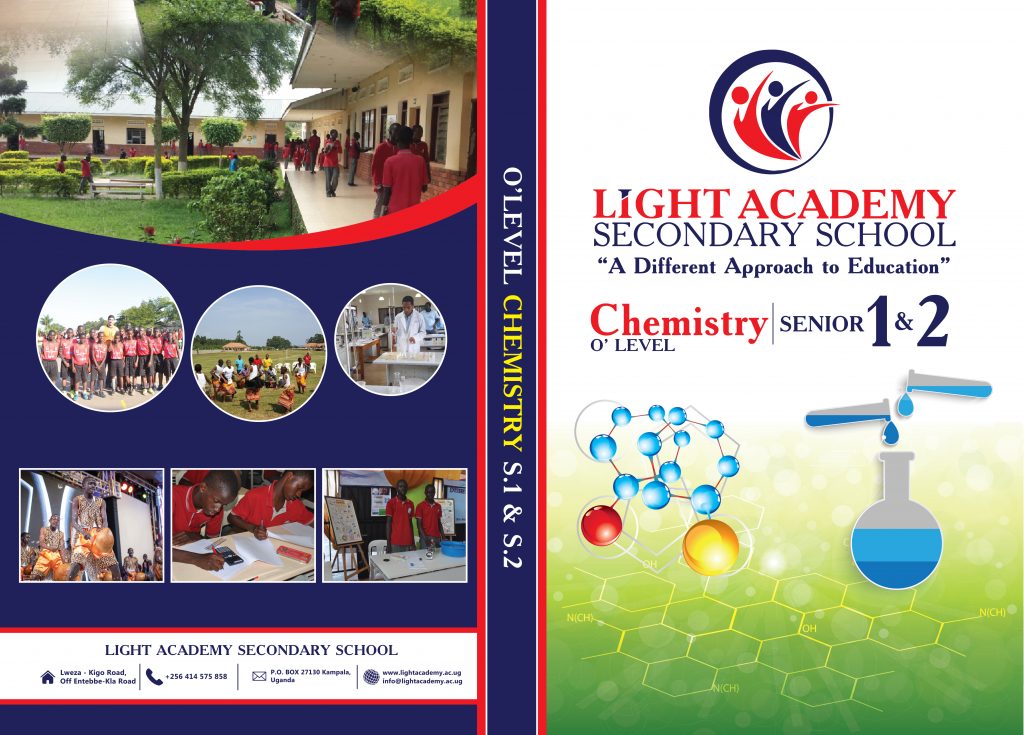
Mandatory School-Compiled Textbooks are a set of textbooks specifically selected and approved by the school for each subject and class level. These books:
Cover the Curriculum: Ensure all topics required by the national or school curriculum are included.
Standardized Learning: Provide a uniform learning resource for all students.
Supplementary Activities: Often include exercises, examples, and revision questions.
Teacher-Guided: Designed to be aligned with the school’s teaching plan and assessment methods.
Mandatory Use: Students are required to use them for classroom lessons, homework, and exam preparation.
This Learners’ Guide consists of school-approved textbooks designed to cover the full curriculum, ensure standardized learning, and support both classroom and independent study. Each guide includes key topics, exercises, and revision questions aligned with the school’s teaching plan, making it an essential tool for lessons, homework, and exam preparation.
In short: These textbooks are the official learning materials compiled to standardize teaching and ensure curriculum coverage across all classes.